
Cash Thresholds in AML/CFT: What UAE Businesses Need to Know
Ready to Defeat Your AML Compliance Obstacles?
Citadel Brings Revolution with Secure Solutions to AML Compliance Problems
What Is a Cash Threshold in AML/CFT- Brief Overview
- A cash threshold in AML/CFT is a specified transaction amount that may trigger enhanced AML/CFT monitoring, checks or reporting requirements.
- Large cash payments, repeated cash deposits, structuring, high-risk customers, and unexpected business activity are common red-flag scenarios associated with cash transactions.
- Citadel365 helps businesses strengthen their AML/CFT compliance through practical AML advisory, risk assessment, and transaction monitoring software.
What Is a Cash Threshold in AML/CFT?
A cash threshold is a specific amount that triggers additional anti-money laundering (AML) and counter-terrorist financing (CFT) requirements and requires regulated entities to report it to the authorities.
Regulators often set the threshold limit, as it helps them and businesses to identify, monitor, and assess higher-value cash transactions and detect potential ML/TF and other financial crime risks.
The cash threshold and transaction limits often differ from each other, as a cash threshold is generally a compliance or reporting trigger, whereas a transaction limit is the maximum amount permitted for a transaction.
Exceeding a threshold does not automatically make a transaction suspicious; suspicious transactions depend on factors such as customer profile, behaviour, geographies, and other AML/CFT red flags.
How Cash Thresholds Strengthen AML Compliance
Cash thresholds often matter for AML compliance as they set clear limits to stop criminals from moving large amounts of illicit funds, helping businesses in:
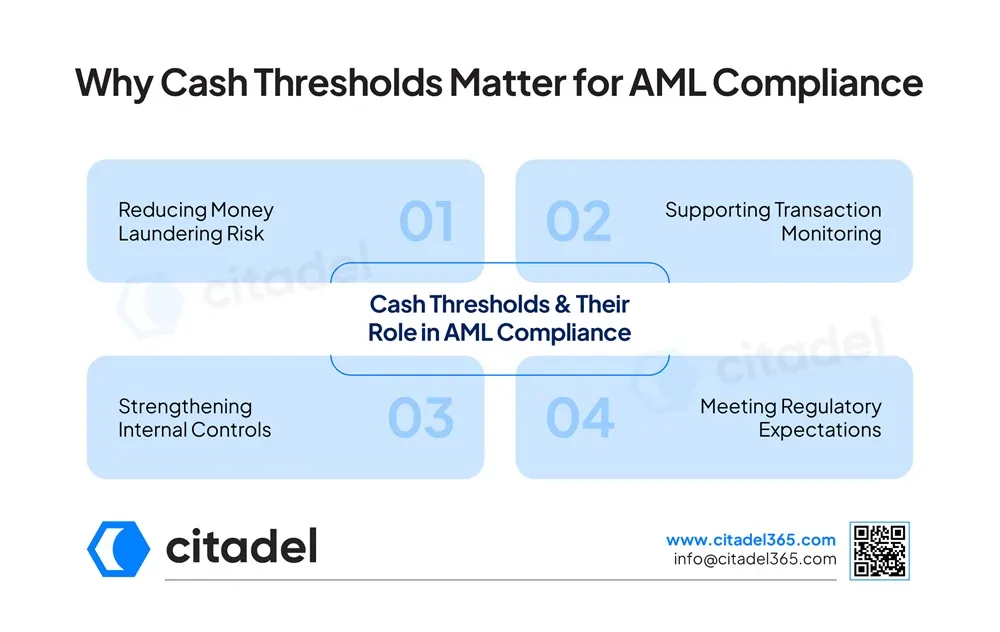
Reducing Money Laundering Risk
Cash thresholds help limit the use of cash and flag transactions that may require higher scrutiny, helping organisations reduce the risk of money laundering and other illicit activities.
Supporting Transaction Monitoring
Defined thresholds make unusual cash transactions easier to flag and help organisations identify patterns that may indicate suspicious activity.
Strengthening Internal Controls
Clear cash limits help businesses with consistent procedures for recording, reviewing, and approving cash transactions.
Meeting Regulatory Expectations
It also helps organisations to maintain robust AML controls and ensure regulatory compliance.
See the Risk. Act on It. Stay Compliant.
Citadel365 helps businesses turn AML/CFT risk insights into stronger controls and more informed compliance decisions.
How Cash Transaction Thresholds Work
Cash transaction thresholds help businesses determine when a cash transaction requires additional attention, review or verification.
Risk-Based Monitoring
Transactions are assessed based on customer profile, transaction value, frequency, and nature.
Automatic Review Triggers
Transactions that meet the defined thresholds or trigger unusual patterns may require further review.
Customer Due Diligence (CDD)
Customer identity, business relationship and transaction purpose may need to be verified.
Occasional Transactions
Occasional transactions may still require proper verification and identification where required.
Enhanced Due Diligence
High-risk customers and transactions may often require additional verification and closer monitoring.
Source of Funds Verification
Businesses may need to verify the original source of funds, especially for higher-risk transactions.
What Happens When a Cash Threshold Is Reached?
When a cash transaction reaches a relevant regulatory or internal threshold, it may trigger additional AML/CFT controls and require the following:
Additional verification
When the threshold is triggered, the business may need to obtain or verify additional information about the customer, the transaction purpose or the source of funds.
Review by compliance teams
High-risk transactions or large amounts of cash may require review by the organisation’s compliance or AML team before further action is taken.
Transaction monitoring
Transactions may be subject to enhanced monitoring to identify unusual patterns, linked transactions, or other indicators of financial crime.
Potential reporting obligations
Any transactions or activities that indicate suspicion of ML/TF or other financial crime risks require entities obligated to submit a suspicious transaction report to the relevant UAE authorities.
Common Cash Transaction Red Flags
In AML/CFT, cash threshold scenarios involve activities designed to evade mandatory reporting limits.
Some of the common scenarios include:
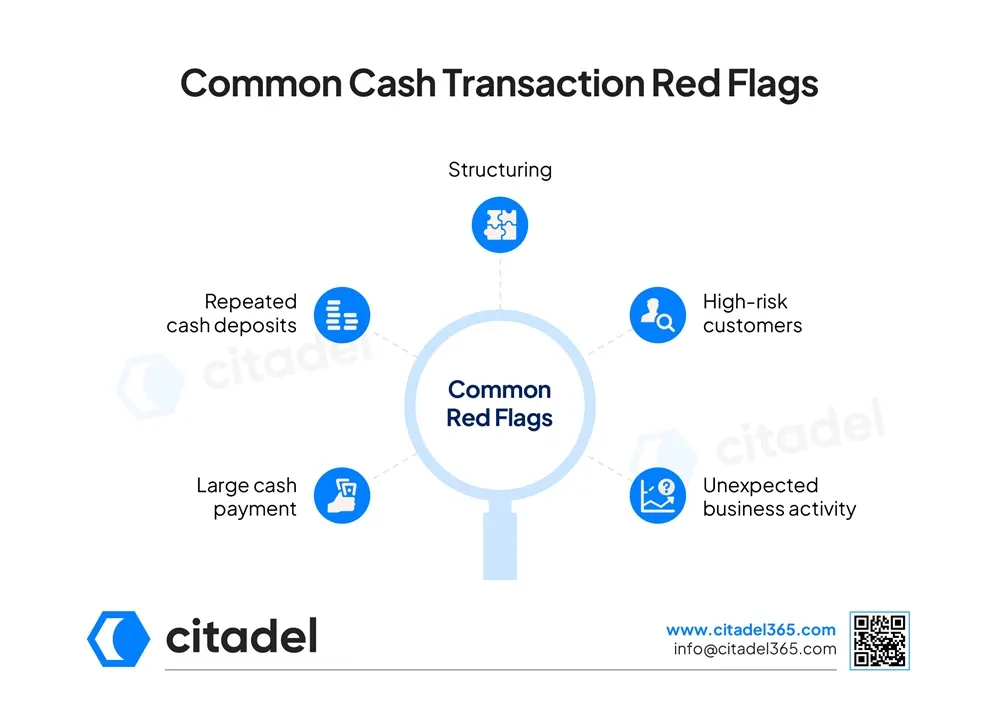
Large cash payment
High-value cash payments require additional checks, especially when the transactions do not match the customer’s normal business activity or risk profile.
Repeated cash deposits
Frequent cash deposits without a clear business or commercial purpose may indicate money-laundering risk.
Structuring (smurfing)
Breaking down large transactions into multiple smaller transactions, often to avoid reporting thresholds.
High-risk customers
Transactions involving customers from high-risk jurisdictions.
Unexpected business activity
A sudden change in transaction patterns, cash volumes or business activity that is inconsistent with the customer’s known profile or business activity.
Best Practices for Setting Internal Cash Thresholds
The key best practices for setting internal cash thresholds are as follows:
Risk assessment
Set internal cash thresholds based on the institution’s ML/TF risk assessment, across customer profiles, transactions, and other relevant risk factors.
Customer segmentation
Thresholds and monitoring controls should be aligned with the customer’s risk classification, with enhanced controls applied to customers with higher ML/TF risks.
Ongoing threshold reviews
Internal thresholds should be reviewed periodically and whenever business activities, customer risk profiles, or emerging ML/TF risks change.
Documenting decisions
Businesses should also maintain adequate documentation and proper audit trails for internal cash thresholds to support proper regulatory compliance.
Common Mistakes Businesses Make
Businesses often make critical compliance and risk management errors; some of them include:
Treating thresholds as legal limits
Assuming that staying below a prescribed threshold means there is no compliance or reporting obligation.
Ignoring cumulative transactions
Assessing transactions individually without considering the total value, frequency or overall patterns of transactions.
Failing to update risk models
Using outdated risk assessments without reflecting changes in regulations, business activities or customer profiles.
Overlooking customer behaviour
Failing to identify unusual changes in transaction patterns, business activities or customer behaviour that may increase risks.
Poor documentation
Maintaining incomplete or inadequate records, making it difficult to prove the basis for compliance decisions or risk assessments.
How Citadel Helps Businesses Strengthen AML/CFT Compliance
Citadel365 helps businesses strengthen their AML/CFT compliance through practical AML advisory, helping businesses address compliance requirements effectively.
Citadel365 risk assessment helps identify, assess and manage potential ML/TF risks across customer profiles, products, services, and business activities.
Its transaction monitoring support helps businesses identify unusual transaction patterns and potential ML/TF red flags in a timely manner.
Citadel365 helps in implementing AML/CFT policies, procedures, and controls aligned with regulatory expectations.
It also enables businesses to address compliance gaps and stay prepared for regulatory reviews and evolving requirements.
Conclusion
Cash thresholds should be viewed as risk-management tools, not standalone legal limits. Businesses need a risk-based AML/CFT framework along with ongoing monitoring, effective internal controls and proper documentation.
Turn AML Compliance Into Confidence
Citadel365 helps build a stronger, risk-based AML/CFT framework and enables businesses to identify risks and strengthen overall compliance.
Frequently Asked Questions
A cash transaction threshold is a specified amount that may trigger enhanced checks, reporting or other AML/CFT requirements.
No, not every transaction above a monetary threshold requires regulatory reporting, it depends on the applicable regulations and the nature of the transaction.
Cash thresholds focus on specific transaction amounts, while transaction monitoring looks at broader patterns and unusual customer activity.
Yes, automated AML software such as Citadel365 helps in managing cash thresholds by setting threshold rules, transaction monitoring, and generating alerts.

Vasantha holds a Master’s in Law specialising in Banking Laws and Anti-Money Laundering and is CAMS and CGSS certified. With over 35 years of experience, she has worked closely with regulators and international financial institutions, building financial crime risk frameworks, sanctions monitoring programmes, and compliance systems across multiple jurisdictions.